

Contents
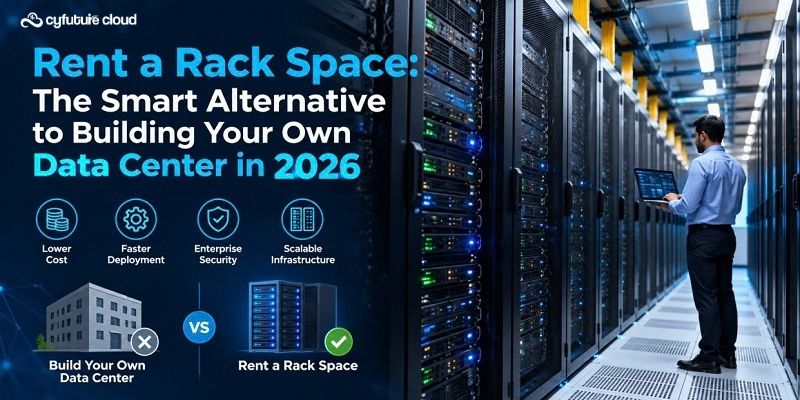
Rent a rack space is a colocation service where businesses lease physical space in a professional data center to house their own servers and networking equipment. Instead of building and maintaining an in-house server room, companies place their hardware in a third-party facility that provides power, cooling, security, and connectivity. In 2026, renting rack space has become the preferred choice for organizations that want enterprise-grade infrastructure without the capital expense and operational burden of building their own data center.
What Does It Mean to Rent a Rack Space?
When you rent a rack space, you are essentially leasing a portion of a data center’s physical infrastructure. A colocation data center rents space—a single rack, a room, or a large share of the premises—to multiple businesses that typically own and control their own hardware. The facility provides the surrounding space, power, cooling, and physical security, while you own and manage the servers.
Think of it like renting an apartment instead of building a house. You get access to professional infrastructure, security, and connectivity without the massive upfront investment and ongoing maintenance responsibilities.
How Rack Space Is Measured
Rack space is measured in “U” (rack units), where one U equals 1.75 inches of vertical rack height. Standard racks are typically 42U to 48U in height, and businesses can rent space by the U, quarter rack, half rack, or full rack depending on their needs.
Common configurations include:
- 1U–2U: Single server deployments, small businesses
- Quarter Rack (10U): Growing businesses, network equipment
- Half Rack (20U–21U): Mid-size companies, test environments
- Full Rack (42U–48U): Enterprise deployments, production infrastructure
Pricing for Rent a Rack Space in 2026
Colocation pricing in 2026 varies based on location, facility tier, power density, and included services. Here are typical price ranges:
A standard full rack (42U, 3–5 kW) runs approximately $900–$2,500 per month all-in at a Tier 3 facility, depending on market and term length. High-density racks supporting 10–30 kW or more for AI inference workloads can exceed $3,000–$6,000 or more per month before bandwidth and cross-connect charges.
What’s Included When You Rent a Rack Space
When you rent a rack space, the colocation provider typically supplies:
- Physical Space: Secure rack space measured in U units or full/half/quarter racks.
- Power: Redundant power feeds (often dual A+B feeds), UPS backup, and generator support.
- Cooling: Precision cooling systems maintaining optimal temperature and humidity.
- Physical Security: Biometric access, 24/7 surveillance, mantraps, and access control.
- Network Connectivity: High-bandwidth internet, carrier-neutral options, and cross-connects to ISPs and cloud providers.
- Uptime Guarantees: Often 99.99% or higher availability SLAs.
- On-Site Support: Remote hands services and technical assistance when needed.
Rent a Rack Space vs. Building Your Own Data Center
The choice between renting rack space and building your own data center involves several key considerations:
Building data centers requires multi-year timelines and significant capital expenditure, while colocation involves renting space in an existing facility operated by a provider. Colocation is space, power, cooling, and physical security sold as a service.
Benefits of Renting Rack Space
Renting rack space offers several key advantages:
1. Cost Efficiency
Organizations avoid the massive capital expense of building their own data center. Instead of multi-million dollar investments, businesses pay predictable monthly fees based on space and power usage.
2. Faster Deployment
Rack space can be provisioned in weeks rather than the 2–5 years required to build a data center. This enables businesses to scale infrastructure quickly to meet demand.
3. Enterprise-Grade Infrastructure
Colocation facilities offer Tier III and Tier IV infrastructure with redundant power, cooling, and security that would be prohibitively expensive to build independently.
4. Focus on Core Business
Teams can focus on managing servers and applications rather than facility operations, power management, and cooling systems.
5. Scalability
Businesses can start with a single U and expand to multiple racks or private suites as needs grow. This flexibility supports both startups and large enterprises.
6. Carrier-Neutral Connectivity
Most colocation facilities offer carrier-neutral options, enabling connections to multiple ISPs and cloud providers for optimal performance and redundancy.
7. Compliance and Security
Professional data centers maintain compliance certifications (SOC 2, ISO 27001, etc.) and implement enterprise-grade physical security measures.
When to Rent a Rack Space
Renting rack space is the right choice when:
- You need enterprise infrastructure without capital expenditure.
- Your team lacks expertise in facility management.
- You need to deploy infrastructure quickly.
- You want predictable monthly costs rather than variable cloud bills.
- You require compliance certifications and high security.
- You want the flexibility to scale up or down as needed.
Final Thought
Rent a rack space is more than just leasing server space. It is a strategic infrastructure decision that enables businesses to access enterprise-grade data center facilities without the burden of building and maintaining their own. In 2026, as organizations balance cost, performance, and operational complexity, renting rack space remains the smart alternative for companies that want control over their hardware while leveraging the reliability, security, and scalability of professional colocation facilities.